Razors · Strops · Brushes · Soap
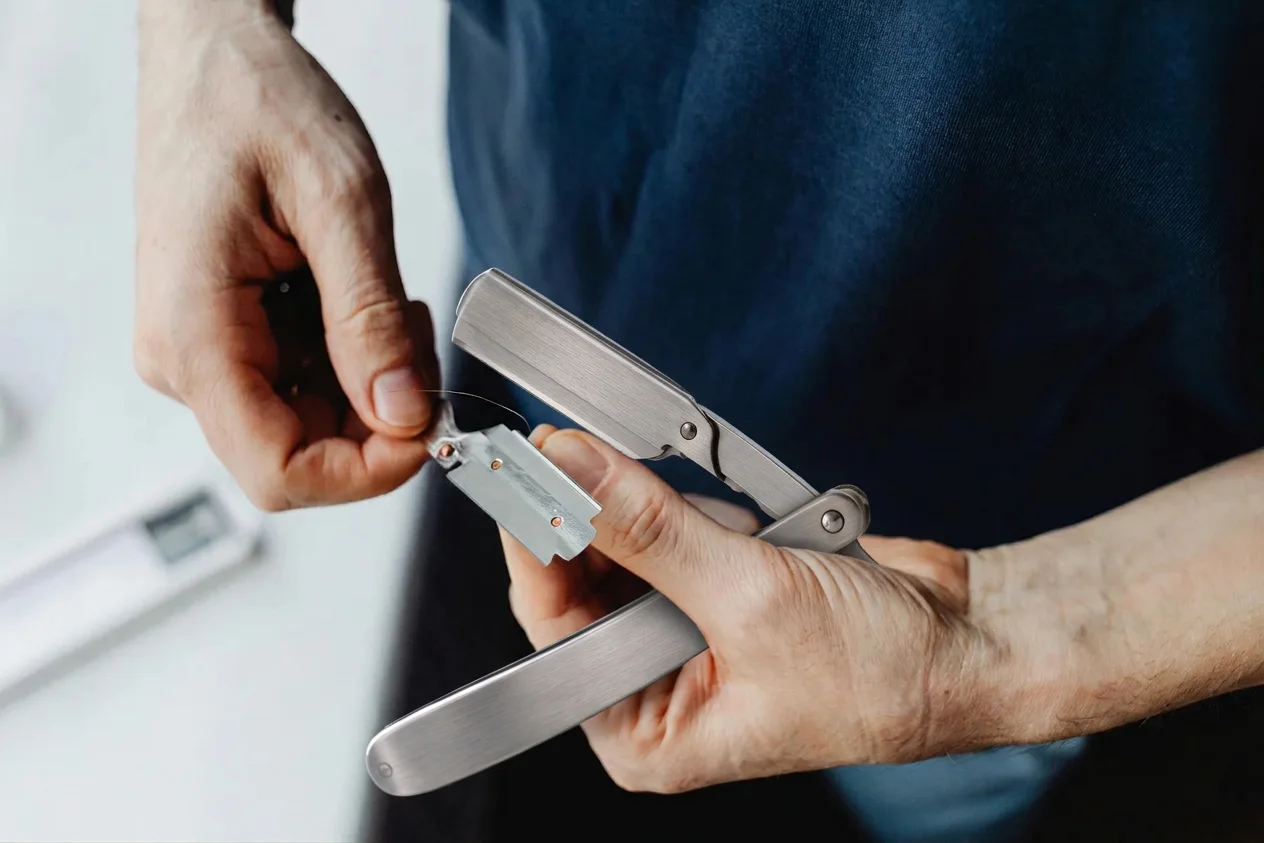
The shavette vs straight razor choice mostly comes down to whether you want to look after an edge yourself. A shavette looks and handles much like a traditional cut-throat, but it takes a replaceable half blade, so there is no stropping or honing. A straight razor has a fixed blade that you keep sharp with a strop and, every few months, a hone. This guide compares the two on cost, upkeep and feel, and looks at why barbers tend to use shavettes, so you can work out which suits the way you shave.
What a shavette is
A shavette is a folding razor with a handle like a cut-throat, but instead of a forged blade it has a holder at the business end. You slide or clamp a half blade into it, shave, and swap the blade when it gets tired. Most shavettes take a double edge blade snapped in half, or a purpose-made half blade, depending on the design.
We sell two. The Bolt shavette is all steel and costs £18. The Tumbler shavette has walnut scales and costs £24. Both take our half blades.
Shavette vs straight razor compared
| Shavette | Straight razor | |
|---|---|---|
| Blade | Replaceable half blade | Fixed, forged blade |
| Keeping it sharp | Change the blade | Strop every shave, hone every few months |
| Upfront cost | £18 to £24 | £44 to £79, plus a strop |
| Running cost | Half blades at £10 per 100 | Honing now and then |
| Weight and feel | Light, with a thin blade that can flex slightly | Heavier and stiffer, with a smoother feel once stropped |
| Forgiveness | Less forgiving of a poor angle | More forgiving once you have the stropping right |
| Best for | Beard edges and a low cost start | Full shaves for people who enjoy the upkeep |
Fixed blade vs replaceable blade
This is the main difference, and most of the others follow from it. A straight razor's blade is part of the razor. Look after it and it will last for decades. A shavette's blade is thrown away after a few uses, and the holder lasts.
That means a shavette is sharp out of the packet every time, with nothing to learn before your first shave. With a straight razor, the edge is only as good as your stropping and the last honing. That is extra work, but some men find it is the part they enjoy most.
Honing and stropping
A shavette needs neither. Some people give the blade a few strokes on a strop out of habit, but it makes little difference to a disposable blade.
A straight razor needs stropping before every shave, and that is a skill in itself. The guide on how to strop a straight razor explains it. It will also need honing, usually every few months, either on your own stone or through a honing service. For more on keeping one in good order, see how to look after a straight razor.
Cost
The shavette is cheaper to buy. With the Bolt at £18 and a box of 100 half blades at £10, you have the razor and a good supply of blades for £28. Most people get one to three full shaves from a half blade, so a daily shaver might use somewhere between 120 and 365 blades a year. That is around £12 to £36 a year in blades.
A straight razor costs more at the start. The Warden, a 5/8 carbon steel razor, is £59, and a hanging strop adds £38. After that the running cost is honing and very little else. Over several years the straight razor tends to catch up on cost, but the shavette is the cheaper way in.
How they feel
They feel different in the hand, even though they look alike. A shavette is light, and the half blade is thin, so it can flex a little against the skin. A fresh blade is extremely sharp, and many people find it feels keener and less forgiving than a straight razor. Small angle mistakes are more likely to end in a nick.
A straight razor has more weight, and that weight does a lot of the work. The thicker, stiffer blade glides more evenly, and a well stropped edge tends to feel smoother on the skin. Plenty of men who learn on a shavette find a straight razor more comfortable once they move across, although others are perfectly happy staying with a shavette.
Why barbers use shavettes
Most barbers use shavettes for one simple reason, which is hygiene. A fresh blade for each customer is the easiest way to avoid passing anything from one person to the next, and it removes the need to sterilise and strop a fixed blade between clients. It also saves time in a busy shop, because there is no stropping and no honing to keep on top of.
None of this is a problem at home, because you are the only person using your razor. So the hygiene argument matters less for personal use, but the convenience still applies.
Good for beard edges
If you keep a beard and mostly use a razor to clean up the cheek line and neckline, a shavette is hard to beat. The narrow head lets you see exactly where the edge meets the skin, and you can work into corners with the toe. Our guide on how to line up a beard with a straight razor covers the technique, and it works the same way with either razor.
Cut-throat razors and loose blades are sold to over-18s only in the UK, with an ID check on delivery (see our delivery page). A shavette on its own ships without a blade, so it goes by normal post.
Which should a beginner learn on?
Opinions differ, and both routes work. Starting on a shavette is cheaper and you avoid the stropping and honing while you learn the shaving itself. The downside is that the blade is less forgiving, so you may nick yourself more at first.
Starting on a straight razor means learning to strop at the same time as learning to shave, which is more to take in. In return, a properly stropped straight razor is usually kinder to a beginner's mistakes. Whichever you start on, the grip, the 30 degree angle and the way you stretch the skin are the same, so the skills carry across. The guide on how to shave with a straight razor applies to both. If you are still weighing up a safety razor as well, see straight razor vs safety razor.
Your next step
If you want the simplest way to try cut-throat shaving or to keep your beard edges sharp, the Bolt shavette with a box of 100 half blades is a low cost place to start. If you would rather put a full set together with a brush and soap, you can build your own kit.
The Vault letter
10% off your first order
Join the list for your code and new guides as they go up.
10% off your first order. One letter a week at most. Unsubscribe any time.
 Beginner's kit
 Using a safety razor properly
 Razor care