Razors · Strops · Brushes · Soap
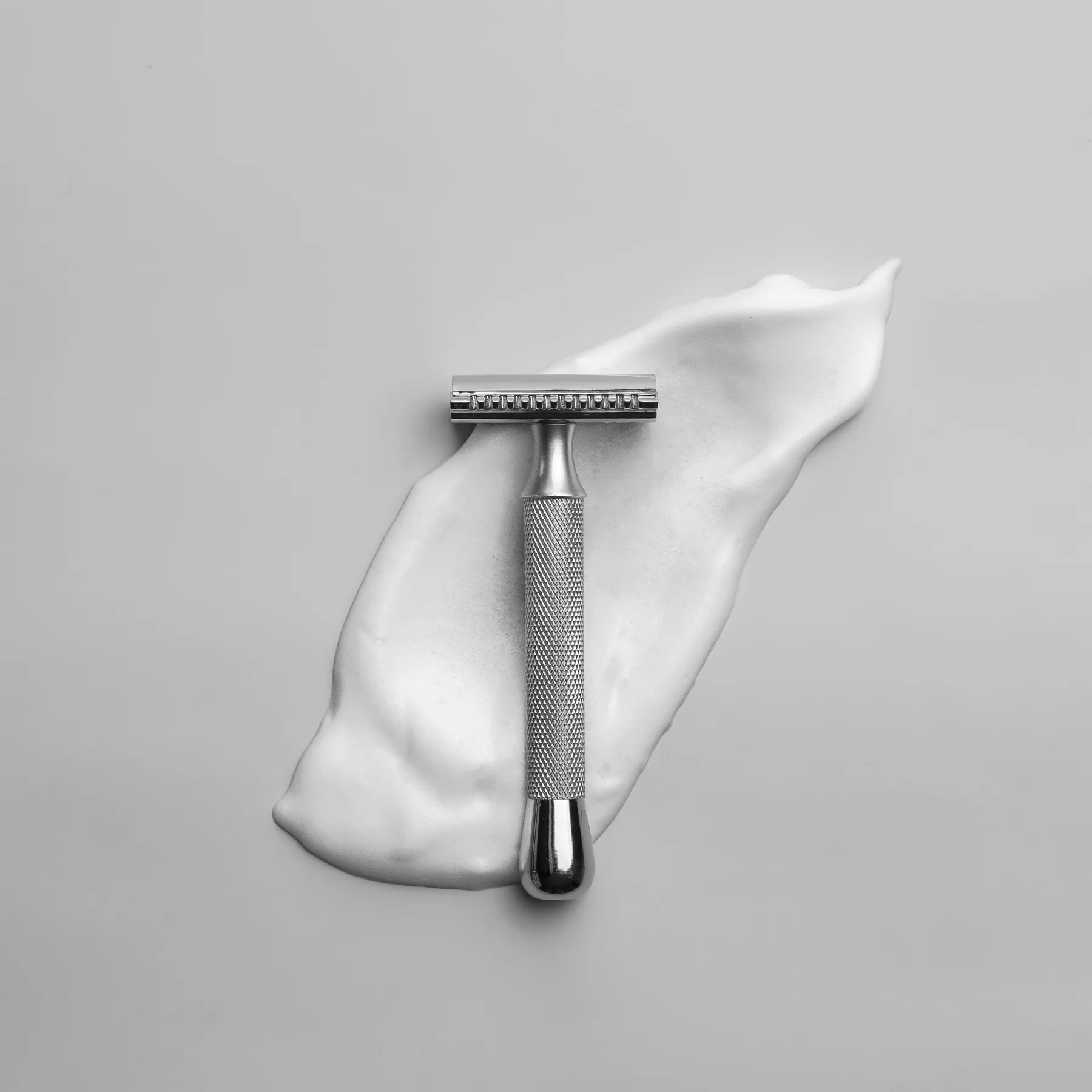
If you are switching from cartridges, learning how to use a safety razor takes a few shaves rather than a few weeks. The main changes are that you use no pressure at all and you hold the handle at the right angle yourself, because the razor has no pivoting head to do it for you. This guide covers loading the two common types of razor, finding the angle, the strokes to use, how long a blade lasts and how to avoid razor burn.
Butterfly or three-piece
There are two common designs. A butterfly razor, such as The Dial, has a knob at the bottom of the handle. Twist it and two doors on the head open so you can drop a blade in. It is quick to load and handy if you change blades often.
A three-piece razor, such as The Lockplate, comes apart into the handle, the base plate and the top cap. It takes a few seconds longer to load, but it has no moving parts in the head, which makes it simple to clean thoroughly. Both shave well, so the choice is mostly about which you find easier to live with.
How to load a safety razor
Double edge blades are sharp on both sides, so always hold them by the short, blunt ends. Loose blades are sold to over-18s only in the UK, with an ID check on delivery (see our delivery page).
Loading a butterfly razor
Turn the knob at the base of the handle until the doors on the head open fully. Take the blade out of its paper wrapper, holding it by the ends, and lay it over the centre bar so the holes in the blade sit over the small posts. Turn the knob back until the doors close and feel snug. Check that the same amount of blade shows on both sides.
Loading a three-piece razor
Unscrew the handle from the head. Hold the top cap with the posts facing up, lay the blade over the posts, then put the base plate on top so it lines up. Turn the whole thing over carefully and screw the handle back on until it is firm but not forced. Again, check that the blade sits evenly on both sides.
Prepare your face
Good prep does more to prevent irritation than anything else. Shave after a shower or hold a hot flannel on your face for a minute, so the hair softens. Then lather up with a brush. A cream such as our shaving cream tub is the easiest to lather if you are new to it. You want a thick, slick lather that stays wet on the face. Our guides on how to build a lather and how to choose a shaving brush go into more detail.
How to use a safety razor, step by step
Use no pressure
This is the biggest change from a cartridge razor, and it matters more than anything else in this guide. A safety razor has enough weight to cut on its own. Hold the handle lightly near the bottom and let the head rest on your skin. Pressing makes the edge bite in, which is what causes most razor burn and nicks.
Find the 30 degree angle
Place the top of the head flat against your cheek, with the handle sticking straight out from your face. The blade will not touch the skin in this position. Slowly lower the handle towards your face until you feel and hear the blade start to cut. That is roughly 30 degrees, and it is the angle to hold through each stroke. If the razor skips or does nothing, lower the handle a touch. If it scrapes, raise it slightly.
Use short strokes
Keep strokes short, about an inch or two at a time, rather than one long sweep from ear to jaw. Short strokes make it much easier to keep the angle steady as your face curves. Rinse the head under hot water every few strokes to clear the lather and hair.
Shave with the grain first
The first pass should follow the direction your hair grows. On most cheeks that is downwards, but on the neck it often changes direction, so feel your stubble beforehand to map it. For a closer finish, relather and do a second pass across the grain. Going against the grain gives the closest shave of all, but it is the pass most likely to cause irritation, so leave it out until your technique is steady, and skip it altogether if your skin does not like it.
The tricky areas
On the chin and upper lip, tighten the skin by pulling your lip over your teeth, and use the end of the head in short strokes. Under the jaw, tilt your head back and stretch the skin down with your free hand. Turning the razor slightly as you go round the jaw line helps keep the full edge in contact.
How long a safety razor blade lasts
Most men get 3 to 5 shaves from a blade, though it varies with how thick your beard is and how often you shave. The signs that a blade is done are a pulling feeling, a rougher sound, or irritation that was not there before. Change it at that point, and do not try to get an extra shave out of it, because a tired blade is one of the main causes of razor burn.
A pack of 100 DE blades lasts a daily shaver well over a year at that rate. Dispose of old blades safely. A small metal tin with a slot in the lid works well as a blade bank, and once it is full you can tape it shut before it goes out with the rubbish.
Avoiding razor burn
Razor burn is usually caused by technique rather than by the razor itself. These are the habits that help most.
Prep well, and never shave over dry or half dry skin. If the lather starts to dry out, add more before you carry on. Use a fresh blade, no pressure and the right angle. Avoid going over the same patch again and again within one pass. If an area needs more work, relather it and go over it in a second pass.
When you are finished, rinse with cold water and pat your face dry rather than rubbing it. An alcohol-free balm is gentler than a strong aftershave if your skin is sensitive.
Cleaning the razor
Rinse the head well under hot water after each shave and let it dry in the air. A stand helps it drain. Every few weeks, take the blade out and give the head a proper clean with warm soapy water and an old toothbrush to clear any soap build-up. A three-piece razor comes fully apart for this, and a butterfly can be cleaned with the doors open.
Your next step
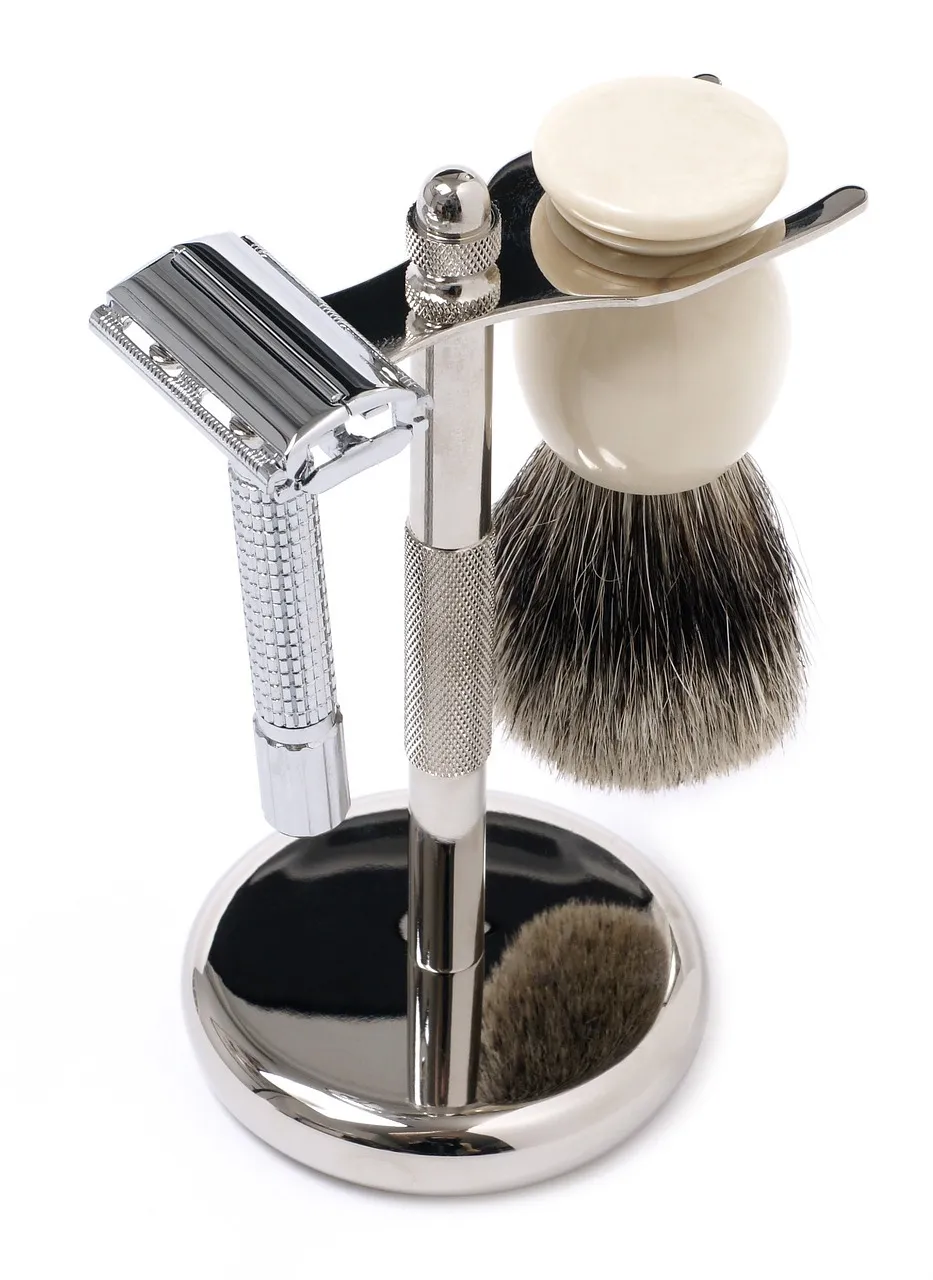
If you are ready to swap your cartridges, The Dial with a pack of 100 DE blades is the simplest way to start. If you are still deciding, our guide on straight razor vs safety razor compares the two, and the wet shaving kit for beginners guide shows what else is worth having. You can also build your own kit and add a brush, cream and stand.
The Vault letter
10% off your first order
Join the list for your code and new guides as they go up.
10% off your first order. One letter a week at most. Unsubscribe any time.
 Beginner's kit
 Razor care
 Shavette or straight razor?