Razors · Strops · Brushes · Soap

A decent brush makes more difference to a wet shave than most people expect, because it is the brush that turns soap and water into a lather that protects your skin. When men ask us which one to buy, it nearly always comes down to badger vs boar vs synthetic shaving brush, and each of the three has a different feel on the face. This guide explains how they differ, what knot size and loft mean, and how to look after a brush so it lasts for years.
A few terms first
Brush descriptions use some words that are worth knowing before you compare anything.
Knot is the bundle of hair or fibre glued into the handle. Knot size is the width of that bundle measured where it meets the handle, usually given in millimetres. Most shaving brushes sit between 22mm and 26mm.
Loft is how far the hair stands above the handle. A tall loft gives a floppier brush that spreads out on the face, and a short loft gives a denser, stiffer one.
Backbone is how much the brush pushes back when you press it against your face. A brush with plenty of backbone scrubs and works lather into stubble. A brush with little backbone feels soft and splays out easily.
Water retention is how much water the knot holds. A brush that holds more water lets you build lather without going back to the tap as often.
Badger vs boar vs synthetic shaving brush
| Badger | Boar | Synthetic | |
|---|---|---|---|
| Feel on the face | Soft, especially silvertip | Firm and scrubby at first | Soft and even |
| Backbone | Medium, depends on grade and loft | Strong | Medium to strong |
| Water retention | High | Medium | Lower, though modern fibres are good |
| Break-in | Very little | A few weeks of use | None |
| Drying time | Slow | Medium | Fast |
| Price | Highest | Lowest | In between |
Badger
Badger hair is the traditional choice and the softest of the natural options. It comes in grades, and the names vary between makers, but silvertip sits at the top for softness, with fine, pale tips that feel very gentle on the face. Badger holds a lot of water, which makes it easy to build a rich lather in a bowl or straight on the face. The downsides are price and drying time, since a dense badger knot can stay damp for a day if it is not stored properly. Our silvertip badger brush has a 24mm knot on a walnut handle.
Boar
Boar bristle is stiffer and coarser than badger, and a new boar brush can feel scratchy for the first week or two. That stiffness is useful, because it gives a boar brush the backbone to load quickly from a hard soap and to scrub lather into a heavy beard line. Boar also needs breaking in. Each bristle has a blunt end at first, and with regular use those ends split and soften so the brush gets noticeably gentler over a few weeks. Soaking it in warm water for ten minutes before the first few shaves helps, and a new boar brush can smell a little of the animal until it has been used and rinsed a few times. Our boar bristle brush is a 22mm knot on a beech handle and is the least expensive way to get a good natural brush.
Synthetic
Synthetic fibres have improved a great deal, and a good synthetic now feels soft at the tips with a fair amount of backbone underneath. A synthetic brush needs no break-in, has no smell, and dries quickly, which makes it the easiest brush to live with if you travel or shave in a small bathroom with poor airflow. It holds a little less water than badger, so you may need to dip the tips in water once or twice more while lathering. For anyone who would rather not use animal hair it is the obvious choice. Our synthetic brush has a 24mm knot and a resin handle.
Which one suits you
If you mostly use hard soaps and like a brush that does some of the work, boar is a very good starting point and costs very little. If you want a soft brush that holds plenty of water and you do not mind waiting for it to dry, badger is the comfortable option. If you want something that needs no fuss at all, a synthetic is hard to beat.
Men with beards who only shave the cheeks and neck often get on best with a firmer brush, because it pushes lather into the stubble along the edge of the beard without soaking the beard itself. Our guide on how to line up a beard with a straight razor goes into that in more detail.
Knot size and loft
A 22mm knot is compact and easy to control, and it suits face lathering and smaller soap tubs. A 24mm knot is a good middle size that most men are happy with. Around 26mm the brush starts to feel large, holds more lather, and works best in a bowl. Unless you know you prefer a big brush, something between 22mm and 24mm is a safe choice.
Loft matters as much as width. Two brushes with the same knot size can feel completely different if one has a taller loft, so read both numbers when a maker gives them.
Looking after a brush
Most brushes that fail early do so because they were put away wet. Water sits at the base of the knot and, over time, can weaken the glue or let the hair rot. These habits will keep a brush going for a long time.
- Rinse out every bit of soap under warm running water after the shave. Avoid very hot water on natural hair.
- Squeeze the knot gently from the base towards the tips, then give it a few firm flicks over the sink.
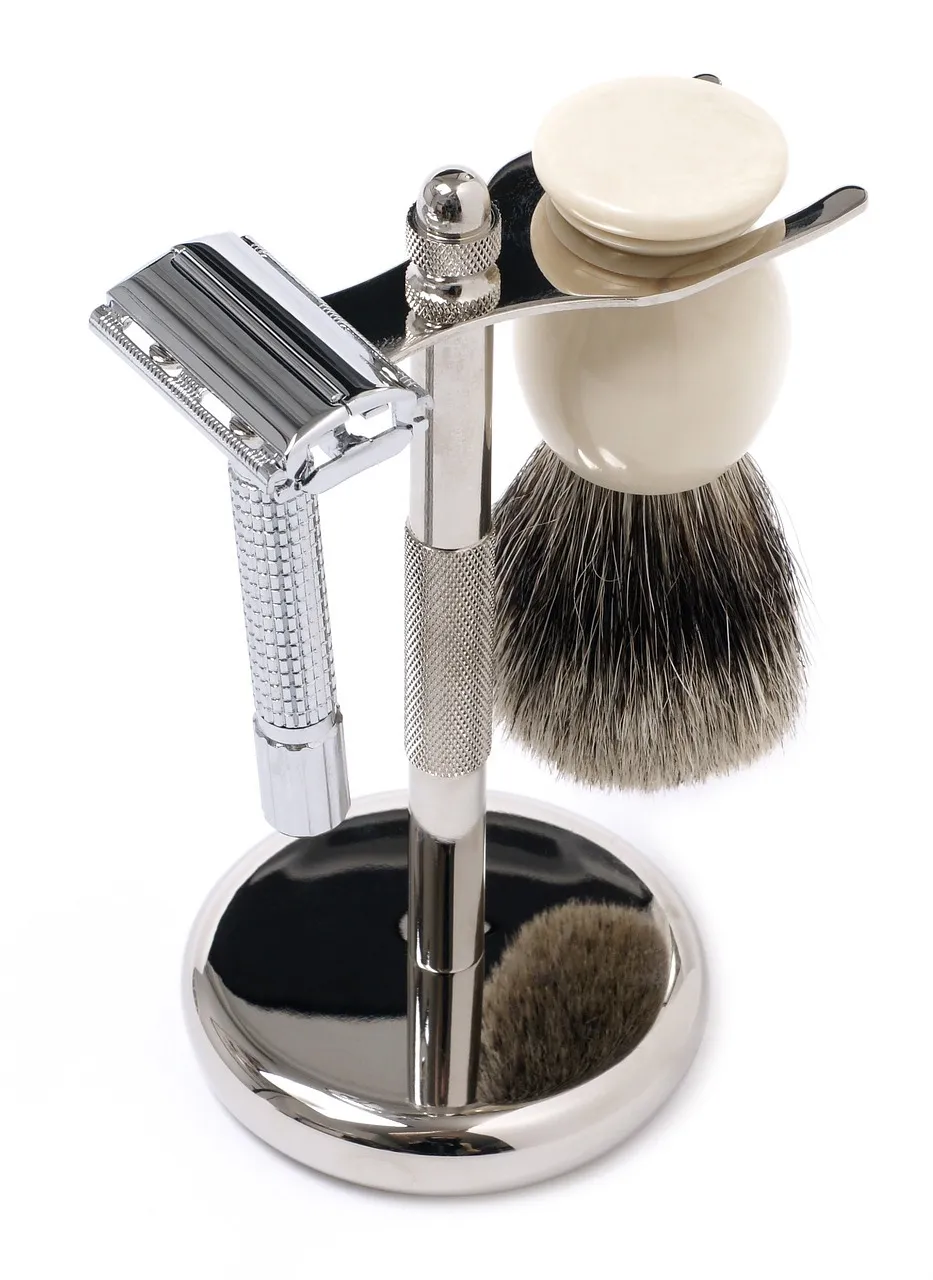
- Hang it knot-down on a stand, so the water drains away from the handle and the air can get at the hair. Our brush and razor stand holds a brush this way alongside a razor.
- Keep it out of closed cupboards and travel cases until it is completely dry.
Never pull at the hairs, and avoid pressing the brush so hard that the knot bends sharply at the base. A few loose hairs in the first weeks of a new brush are normal and usually settle down.
Your next step
Once you have a brush, the next thing to get right is the lather, and our guide on how to build a lather shows you how to do it with a hard soap or a cream. If you are putting together a whole set from scratch, you can build your own kit and choose the brush that suits you alongside a razor and soap. If you just want a good brush to start with today, the boar bristle brush is the one we would point most beginners towards.
The Vault letter
10% off your first order
Join the list for your code and new guides as they go up.
10% off your first order. One letter a week at most. Unsubscribe any time.
 Beginner's kit
 Using a safety razor properly
 Razor care