Razors · Strops · Brushes · Soap
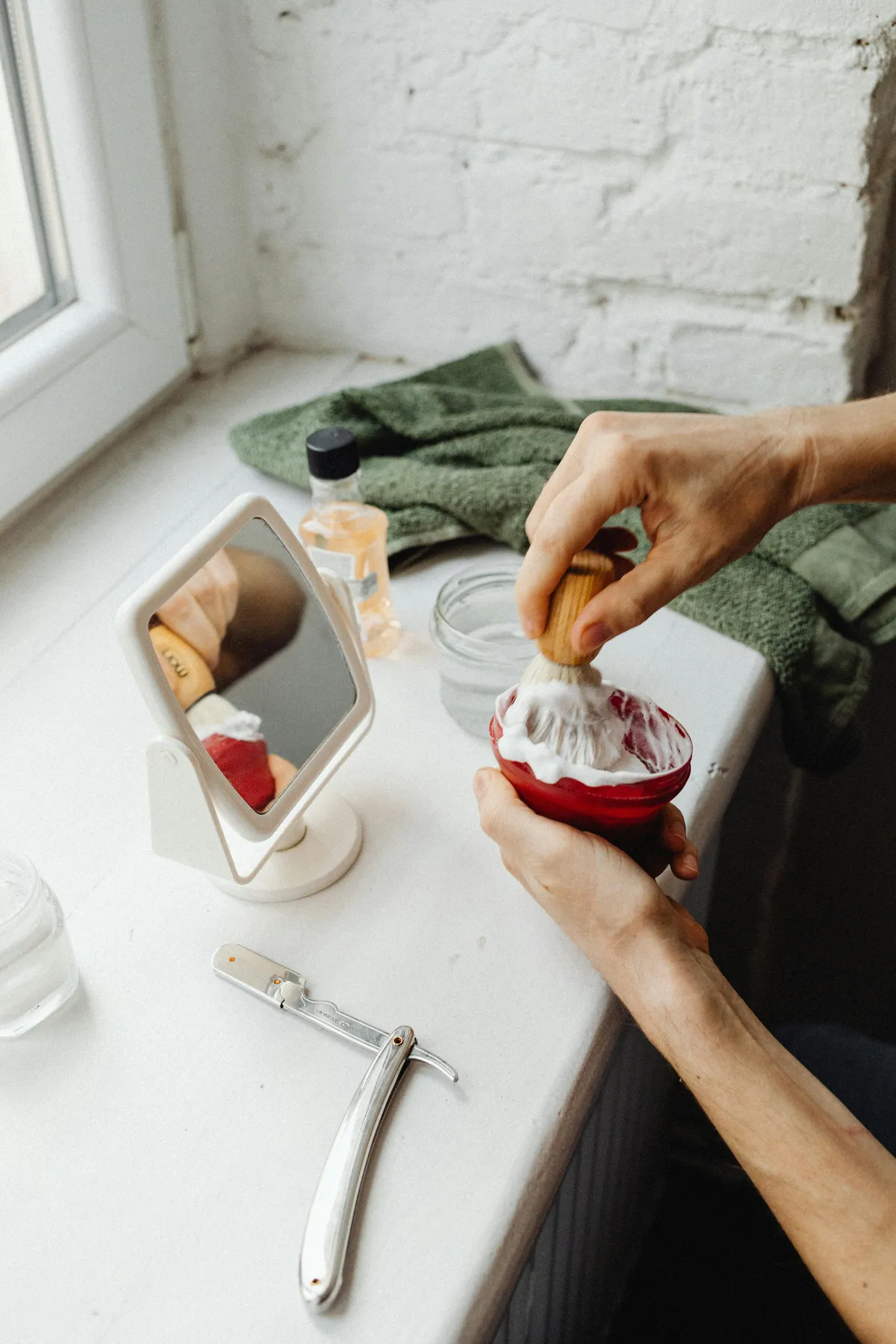
A good lather does most of the work in a wet shave. It softens the stubble and keeps the skin slippery so the blade glides over it. Most men who struggle with irritation after switching from canned foam are using lather that is too thin or too dry, so it is worth learning how to lather shaving soap properly before worrying about anything else. The method is simple once you have done it a few times, and the main skill is judging how much water to add.
What you need
You need a brush, a soap or cream, and either your face or a bowl to lather in. Any of the three common brush types will work, and our guide on how to choose a shaving brush explains the differences. A hard soap such as our sandalwood shaving soap takes a little more effort to load than a cream, but it lasts a long time and gives a dense, protective lather once you have the knack.
Prepare your face first. A warm shower, or a minute or two with a hot flannel, softens the stubble and makes everything that follows easier. If you have a beard and only shave around it, wet the areas you are going to shave and leave the rest alone.
How to lather shaving soap, step by step
1. Soak the brush
Stand the brush in warm water while you wash your face. Badger and boar brushes benefit from a soak of a few minutes, because the hair needs to take up water before it will hold lather. A synthetic brush needs only a quick wetting under the tap.
While the brush soaks, many men pour a few drops of warm water on top of the soap and leave it there. This softens the very top of the puck and makes loading quicker. Tip the water off before you start.
2. Shake out the brush
Take the brush out and give it two or three firm shakes so it is damp but not dripping. Starting with too much water is the most common mistake, because it washes the soap off the brush and leaves you with thin, bubbly lather. It is much easier to add water later than to take it away.
3. Load the soap
Hold the brush upright and swirl the tips over the surface of the soap with light pressure for about 20 to 30 seconds. You should see a thick, pasty layer building up on the tips of the brush. Some soaps load faster than others, and harder soaps generally need the longer end of that time. If the brush still looks thin after half a minute, keep going a little longer.
In areas with hard water, which covers much of the south and east of England, soap tends to lather less readily. Loading for a few extra seconds usually sorts it out.
4. Build the lather
At this point you have a choice between building the lather on your face or in a bowl. Both work well, and the next section covers each one.
5. Add water a few drops at a time
As the lather builds, it will start to look tacky or stiff. Dip just the tips of the brush in water, or let a few drops fall from your fingers onto the brush, then carry on working it. Repeat this two or three times. Each small addition makes the lather wetter and more slippery. Stop when it looks glossy and smooth, before it starts to turn runny.
Face lathering and bowl lathering
Face lathering
With face lathering you take the loaded brush straight to your face and work it in small circles over the area you are going to shave. The brush pushes lather into the stubble and lifts the hairs, and you can feel the consistency change as you go. Add water as described above when it starts to feel dry. Finish with a few straight painting strokes to lay the lather down evenly.
Face lathering is quick and needs no extra kit. It suits firmer brushes with some backbone, such as boar or a dense synthetic.
Bowl lathering
With bowl lathering you put the loaded brush into a bowl and whip it around the sides, adding water in small amounts until the lather is ready, then paint it onto your face. This is easier for beginners because you can see the lather clearly and judge how wet it is. A bowl with ridges inside, like our ceramic lathering bowl, helps the brush build lather faster. A stainless lather bowl does the same job and will not break if it is knocked off a shelf.
Bowl lathering suits softer brushes, which can be too floppy to work well on the face, and it is handy if you shave with a straight razor and want spare lather ready for a second pass.
Signs of a good lather
A good lather looks glossy rather than matt, and it has a texture somewhere between thick yoghurt and whipped cream. The bubbles should be so small that you can barely see them. When you lift the brush away, the lather should form soft peaks that hold their shape for a moment before settling. On the face it should stay moist for the length of a pass without drying out.
If the lather is too dry it will look pasty and dry on the skin within a minute. Add a few more drops of water and keep working.
If it is too wet it will have large, visible bubbles and will slide off your face or collapse on the brush. Go back to the soap and load a little more, then work it in again.
Shaving creams compared with soaps
Shaving cream is softer and lathers more easily than hard soap. You squeeze or scoop out an almond-sized amount, put it in a bowl or on the tips of a damp brush, and build the lather in the same way with small additions of water. Because creams lather so readily they are a good way to learn what a proper lather should look like, and they are quick on a busy morning. Our vetiver shaving cream comes in a 150g tub.
Hard soaps take longer to load, but a puck goes a long way and travels well because there is nothing to spill. Many men keep one of each and use the cream when they are short of time. Once you can make a good lather from a cream, getting the same result from a soap is mostly a matter of loading for longer.
Common problems
If the lather disappears quickly on your face, you are probably not loading enough soap. If it feels thin and watery from the start, the brush was too wet when you began. If you get lots of lather but it feels dry and draggy under the razor, add more water. With practice you will judge it by feel within a week or two.
Your next step
If you are starting from scratch, a synthetic brush and the sandalwood soap are an easy pair to learn with, and you can add a bowl later if you find you prefer it. To put together a full set with a razor as well, you can build your own kit. Once your lather is right, our guides on how to use a safety razor and how to shave with a straight razor cover the shave itself.
The Vault letter
10% off your first order
Join the list for your code and new guides as they go up.
10% off your first order. One letter a week at most. Unsubscribe any time.
 Beginner's kit
 Using a safety razor properly
 Razor care