Razors · Strops · Brushes · Soap

If you are buying your first cut-throat, the choice of steel comes up straight away, and the carbon steel vs stainless steel straight razor question is one that comes up with nearly every new shaver. Both will give you a close, comfortable shave once they are honed properly and stropped before each use. The differences show up in how the edge feels, how easy the blade is to sharpen again later, and how much looking after it needs in a damp British bathroom. This guide goes through each of those in turn and finishes with a straight answer on which to start with.
What the two steels actually are
All razor steel is an alloy of iron and carbon. What people call "carbon steel" in a straight razor is a high-carbon steel with very little else added, so it hardens well and takes a very fine edge. It has no real protection against rust, which is why old razors often turn up with dark spots on the blade.
Stainless steel has chromium added, usually a good deal of it. The chromium forms a thin layer on the surface that resists rust and staining. That protection is useful, although it changes how the steel behaves on a hone, and the grade used matters more with stainless than it does with carbon.
Carbon steel vs stainless steel straight razor, side by side
The table below is a fair summary of how most carbon and stainless razors compare. Individual grades vary, so treat it as a general guide rather than a rule for every razor ever made.
| Carbon steel | Stainless steel | |
|---|---|---|
| Edge feel | Very keen and smooth, often described as softer on the face | Can feel slightly crisper or harsher to some men |
| Honing | Responds quickly to the stones | Usually takes longer, and some grades are fussy |
| Holding an edge | Good with regular stropping | Often holds a little longer between honings |
| Rust | Will spot or rust if left wet | Resists rust well, though it is not completely immune |
| Looks over time | Darkens and develops a patina | Stays bright |
| Care needed | Dry after every shave, light oil if stored | Dry after every shave |
Edge keenness
Carbon steel has a fine grain, and on a good set of hones it takes an edge that many experienced shavers describe as the smoothest they have used. Stainless can be honed to a very good edge as well, and on a well-made stainless razor most men would struggle to tell the difference in a blind test. Where people do notice it, they tend to say the carbon edge feels a touch gentler. That is a matter of feel more than closeness, since both will take the stubble off cleanly.
Ease of honing
This is where the two steels part company most clearly. Carbon steel responds quickly on a waterstone or a natural hone, so a blade that has gone a bit dull can be brought back in a few minutes by someone who knows what they are doing. Stainless is usually slower to work, and with some of the harder grades it takes patience and a good finishing stone to get it really smooth. If you plan to learn honing yourself one day, carbon is the easier steel to practise on. If you would rather send the razor away to be honed, the difference matters a lot less.
Rust and care
A carbon razor left wet on the side of the sink will show orange spots within a day or two, and if that is ignored the spots can pit the steel. The fix is simple enough. Rinse it, pat it dry, leave it open for a while so any water between the scales evaporates, and give the blade a very thin wipe of oil if it is going to sit unused for more than a few days. Our care guide covers this in detail.
Stainless is far more forgiving. You should still dry it after each shave, because water and soap left around the pivot can mark even stainless steel, but you do not need to oil it and a forgotten damp morning will not ruin it.
Over time carbon steel darkens to a grey or bluish patina. That patina is harmless and some men like the look of it. It is different from red or orange rust, which is the thing to watch for.
Stropping is the same for both
Whichever steel you choose, the razor needs stropping before every shave. A hanging strop with a canvas side and a leather side, like our hanging strop, straightens the very edge and keeps the razor shaving well between honings. The technique does not change with the steel, so everything in the stropping guide applies equally to carbon and stainless. Good stropping is also the main reason a razor can go for months between visits to the hone, whatever it is made from.
Which to buy first
For most men starting out, stainless is the safer first choice. Learning to shave with a cut-throat takes a few weeks, and during that time you have enough to think about with blade angle and stretching the skin without also worrying about rust. A stainless blade will put up with the odd morning when you are in a rush and leave it on the side. The Keeper is a 5/8 stainless razor with a round point, which is the size and shape we would suggest for a first razor anyway.
Carbon makes sense as a first razor if you are the sort of person who already looks after tools properly, or if you think you will want to hone your own razors later. The Warden is also 5/8 with a round point, so it is just as easy to learn on, and the care involved is a minute or two after each shave. Plenty of men start with carbon and never have a problem.
If you already shave with a straight razor and want something heavier, The Strongroom is a 6/8 carbon blade. A wider blade carries more lather and feels steadier in the hand, which our guide to straight razor sizes explains in more depth.
Every cut-throat we sell is honed and stropped in the UK before it is posted, so whichever steel you go for it will arrive ready to shave. Cut-throat razors are sold to over-18s only, with an ID check on delivery in the UK, which our delivery page explains.
A few common questions
Is stainless steel worse for shaving?
No, a well-made and well-honed stainless razor shaves very well. The main trade-off is that it is slower to hone, which only matters if you do your own honing.
Will a carbon razor rust in a steamy bathroom?
It can if it is left wet. If you dry it and keep it somewhere with some air, ideally out of the bathroom itself, it will be fine. A drawer in the bedroom is better than a shelf above the bath.
Do I need a different strop for each steel?
No. The same strop works for both, and you strop them in exactly the same way.
Your next step
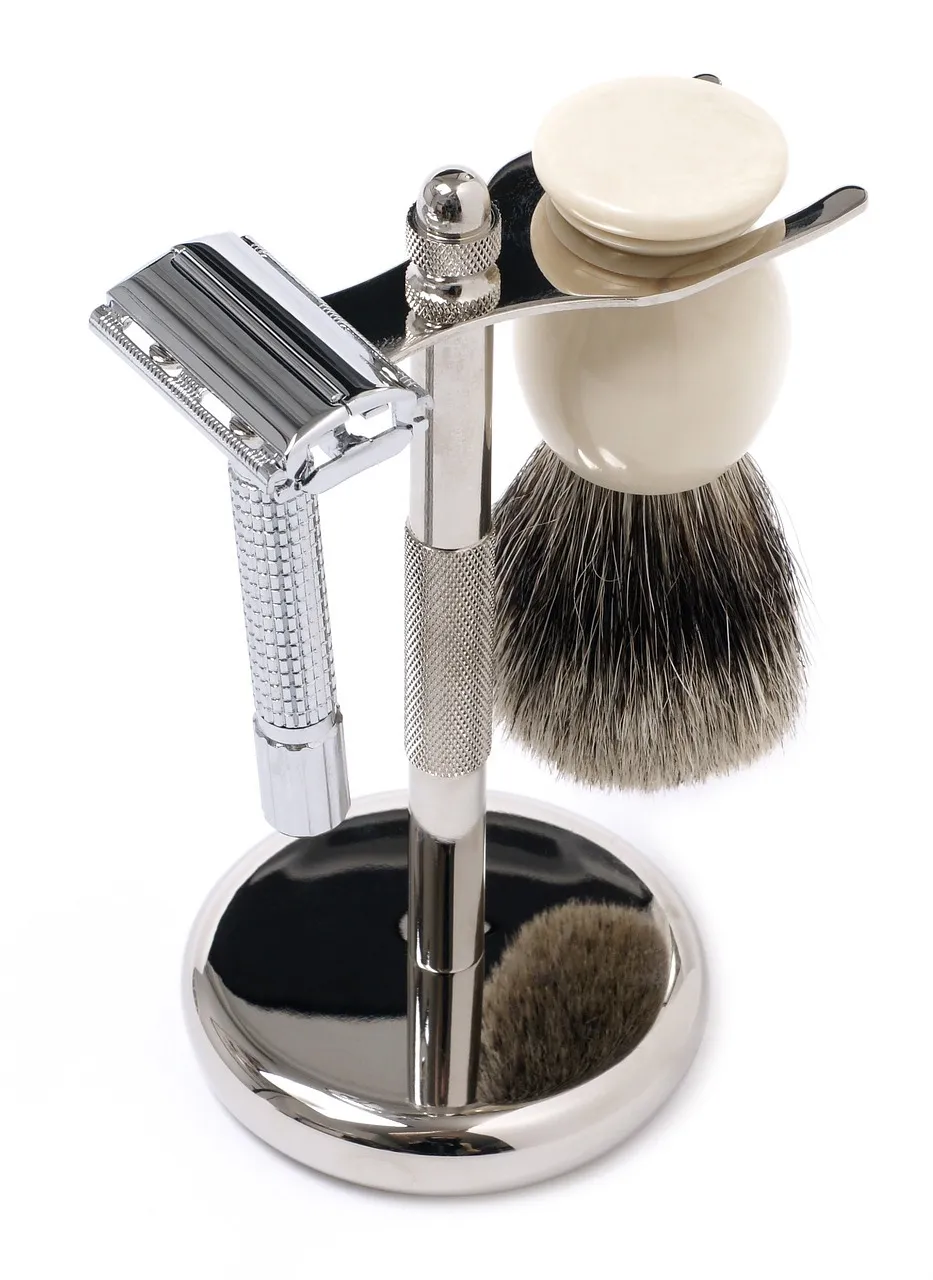
If you want one decision made for you, the beginner's cut-throat kit puts The Keeper together with a hanging strop, a brush and a soap, so you have everything for your first shave. If you would rather choose a carbon razor or a different brush, you can build your own kit and pick each piece yourself. Once it arrives, our guide on how to shave with a straight razor takes you through the first few shaves.
The Vault letter
10% off your first order
Join the list for your code and new guides as they go up.
10% off your first order. One letter a week at most. Unsubscribe any time.
 Beginner's kit
 Using a safety razor properly
 Razor care